
Umberto Crisanti Psychotherapy
CBT, EMDR, Counselling in Kent and online


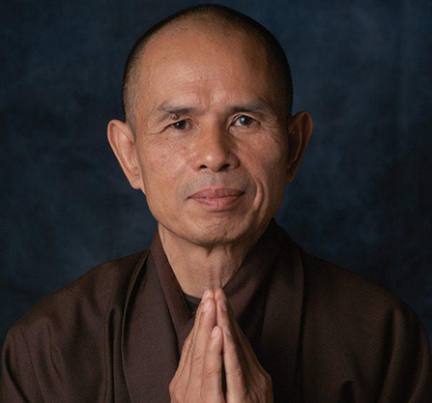
Walk with Thích Nhất Hạnh
Thích Nhất Hạnh speaks of walking meditation not as exercise, but as a way to be present. He encourages us to walk with awareness, to feel each step, to truly arrive in the moment. Walking in nature reconnects us with life, with the earth, with something bigger than ourselves. Walking with others strengthens our sense of belonging. Walking alone deepens our relationship with ourselves. Each step is a reminder that we are here, now, alive.
A client once shared their experience after practising mindful walking:
“I walk to do the walk and trust the process. I don’t do this to lose weight. I don’t have that goal. I don’t do it for the scale.” Despite this, people tell me ‘I have lost 5 kg’, highlighting that the client’s motivation is intrinsic rather than outcome-driven.
Read More..
Walking for the sake of walking is the essence of meditation. When you are not walking to achieve, to arrive somewhere, but simply walking, you are in the present. This is freedom. The mind always wants a goal; losing weight, reaching a destination, proving something. But when you walk without a goal, you walk in awareness. This is the beauty of intrinsic motivation: it is not tied to the ego, to external validation. You are no longer a prisoner of results; you are simply flowing with existence. And in this flow, change happens effortlessly, without struggle, without force. The weight of the body may reduce, but more importantly, the weight of the mind disappears. You become light, unburdened, free.
Thích Nhất Hạnh’s approach to walking reminds us that both solitude and community are essential. At times, we need to walk alone to reconnect with ourselves, to listen deeply to our own breath and thoughts. At other times, walking with others nurtures our sense of belonging and reminds us that we do not walk this life alone. He often spoke about the importance of “kissing the earth with your feet,” and this makes me think of the benefits of walking barefoot, not just as a mindful practice, but also for its profound physical effects.
Walking without shoes stimulates the sensory nerves in our feet, enhancing proprioception, which is our body’s ability to sense its position and movement in space. This improved awareness helps with balance, coordination, and stability, reducing the risk of falls and injuries. Barefoot walking also relaxes the nervous system, encourages better circulation, and promotes natural movement patterns, which can ease strain on the joints and support proper posture.
Additionally, direct contact with the earth, known as grounding, may have physiological benefits such as reducing stress, lowering inflammation, and improving sleep quality. There is also the potential for improved absorption of essential nutrients like vitamin B, which plays a key role in energy production, nervous system function, and overall well-being.
And beyond what we already know, there are likely many other hidden benefits to walking barefoot, subtle ways it influences our health, energy, and connection to the world around us which we may not yet be fully aware of. That’s why I encourage therapists to step beyond the comfort of their rooms and explore the power of walk-and-talk therapy. Walking side by side in nature, rather than sitting in a confined space, can create a more open, relaxed, and flowing dialogue, helping us feel at ease while also benefiting from the movement and fresh air.
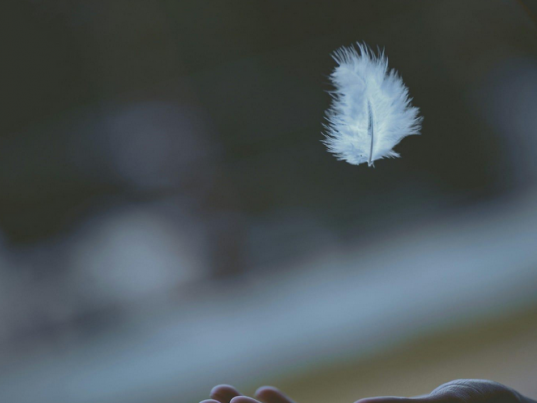
Did the Buddha Know the Way of the Parasympathetic Nervous System?
Once, Buddha was traveling with his disciples and passed a lake that supplied water to nearby villages. It was a hot day, and Buddha, feeling thirsty, sent one of his disciples to fetch water from the lake. When the disciple arrived, he saw the water was muddy, stirred by a bullock cart that had recently passed through. Finding it unfit for drinking, he returned and suggested moving to the next water source. But to his surprise, Buddha instructed the group to remain there and asked the same disciple to return to the lake after an hour.
Read More..
Obediently, the disciple went back. The water was still muddy but less so than before. Again, Buddha asked him to wait and try once more in another hour. The third time, the disciple found that the mud had settled, leaving the water clear and drinkable. He brought the water to Buddha, who observed it and said, “How did you solve the challenge of cleaning the muddy water? By doing nothing. You let it be, and with time, the mud settled on its own. The water became clear naturally. Our minds work in exactly the same way. A disturbed mind, like muddy water, will settle on its own if we allow it. The process of calming the mind is not through force but by letting it be.”
This profound teaching illuminates the essence of healing and restoration, which resonates deeply with how the body and mind are designed to function. The body, this miraculous creation, is not something that needs constant fixing. Like the lake, it holds within it the wisdom and capability to heal and restore itself — if only we allow it to.
Healing is not something you do. It is something you allow. Inside you lies a system so intelligent that it knows how to heal, just as a river knows how to flow or a flower knows how to bloom. But for this natural process to take place, the body needs to enter its healing state — a state of relaxation, openness, and receptivity, governed by the parasympathetic nervous system.
Unfortunately, most of us spend our lives in the opposite state — the sympathetic mode. Like the disciple rushing to fetch water from the lake while a bullock cart passes through again and again, our inner waters never get the chance to settle.
Why?
Because, as Yuval Noah Harari, a renowned historian and philosopher, eloquently puts it, there is a growing tension between us — organic beings who thrive on natural cycles — and the inorganic digital systems that are increasingly shaping and controlling the world. Being organic means we are inherently cyclical beings — we live by the rhythms of day and night, the changing of the seasons, the cycles of growth and decay. We thrive when we can move between activity and rest, exertion and relaxation. This balance is not just a preference; it’s a necessity woven into the fabric of life itself.
In contrast, algorithms, AIs, and computers are not organic. They exist outside the natural rhythms that govern us. They never tire, never pause, and never need rest. They are “on” all the time, operating in a perpetual state of activity. And herein lies the crux of the issue: will we, as organic beings, adapt to these inorganic systems, or will they adapt to us? Increasingly, it seems that we are the ones bending to their relentless pace, at great cost to our well-being.
Hence, Buddha’s teaching reminds us of a simple truth: healing happens in stillness. When we allow the body to rest — just as the disciple allowed the muddy water to settle — our parasympathetic nervous system activates. In this state, the body releases chemicals like oxytocin, which foster relaxation, connection, and joy. It’s here, in this peaceful state, that the body’s natural healing powers awaken. Tension dissipates, the mind clears, and the heart finds peace.
To heal, we must shift from survival to rest, from chaos to calm. This does not require effort; it requires surrender. Awareness is the doorway to this shift. The more we notice the tension in our bodies and the stress in our minds, the easier it becomes to let go. It is like watching a storm pass or clouds drift away, revealing the blue sky that was always there.
Healing, like the settling of the muddy water, is not about striving. It is about trusting the body’s innate wisdom. When you stop trying to control or fix everything, the body naturally returns to balance. Old wounds, trauma, and shame are not erased — they dissolve in the presence of peace. The fog lifts, and you remember your wholeness.
So, just as the disciple learned from the muddy lake, we too must learn to let go. To trust. To stop running from our pain or chasing after solutions. When we allow ourselves to be still, the healing we seek arises effortlessly. This is the power of presence, the wisdom of the body, and the ultimate truth of healing: it doesn’t happen through effort but through surrender, through letting go, and through trusting in the process of life itself.
Sunlight filtering through trees and a toilet #3
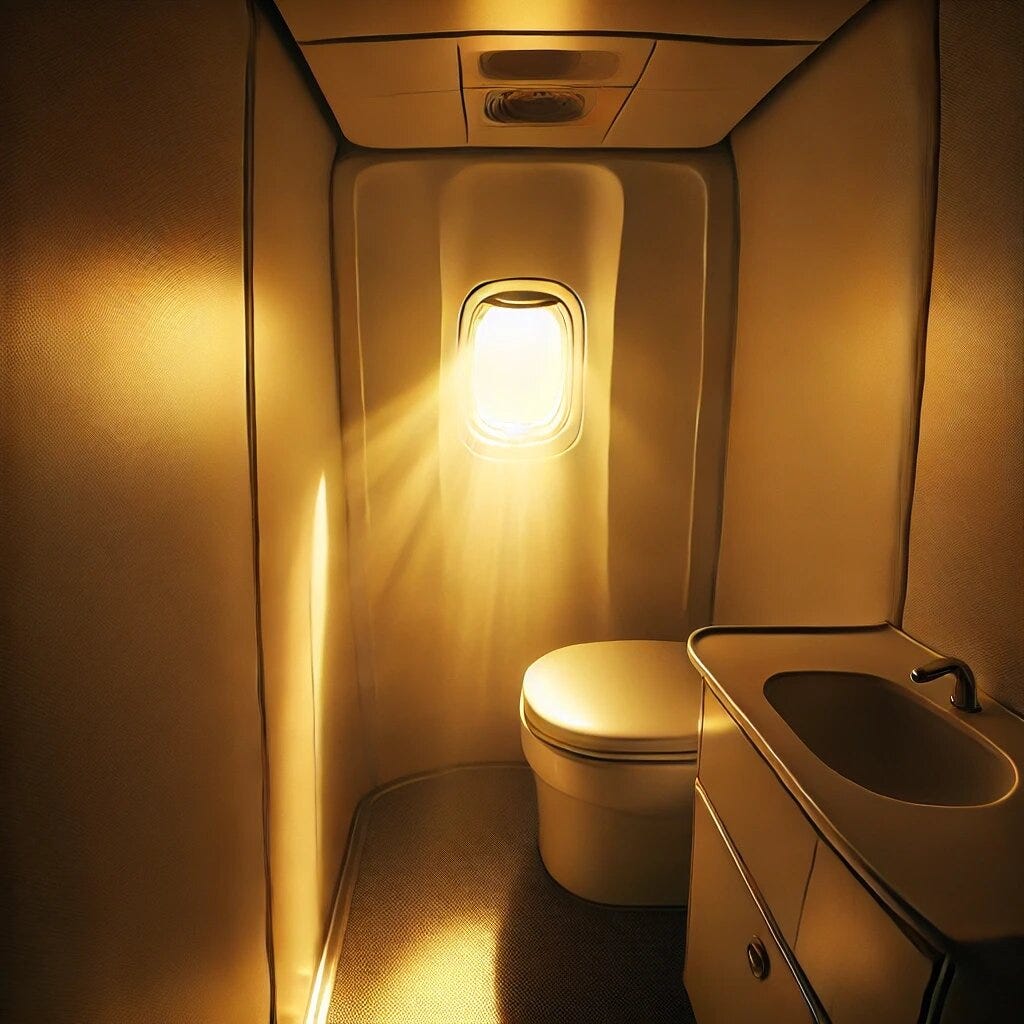
It’s been a couple of weeks since I watched Komorebi. The translated title, Perfect Days, hardly does justice to the beauty of the Japanese word Komorebi, which captures the quiet magic of “sunlight filtering through trees.” Reflecting on this film, or perhaps meditating is the better word, I find myself drawn to the simple, unhurried parts of life. I’m caring more for my plants, spending extra time in nature, slowing down, and discovering the subtle beauty in details I once missed. Above all, I’m cultivating a sense of perspective, calm, and serenity.
On a flight back to England, a seemingly mundane moment became unexpectedly profound. Headed to the toilet, I was reminded of the film’s protagonist, Hirayama (Kōji Yakusho), a humble public toilet cleaner in Tokyo. To me, he seemed like a man of wisdom and freedom, quietly at ease with himself and his choices. He leda life of simplicity, not as a retreat from the world, but as a conscious choice to be fully in it. Despite his modest income, he pursued knowledge and growth, spending evenings at the bookshop, reading late into the night. His contentment wasn’t about having less; it was about appreciating more. As I approached the tiny airplane toilet, an unusual thought crossed my mind: What if I cleaned it? Initially, I felt genuine disgust at the idea — a place like this, after all, wasn’t my responsibility. But the thought lingered. Wouldn’t this act elevate my experience, even if no one would know about it? Yet, my mind quickly conjured reasons against it: “This is a private company’s job, and they pay someone for this work,” and “What would people think if they saw me?”
But then, I caught myself — these were thoughts born of ego. The narrative playing in my head wasn’t truly mine but a chorus of social expectations and identity. I almost laughed at myself: “You’re a professional, you give presentations, and here you are, contemplating cleaning a toilet.”
In that locked space, it dawned on me that I was wrestling not with the idea of cleaning but with the prisons of my own thoughts. This was a small act, inconsequential to the world, but in that moment, it was an act of dissolving the ego — a test of humility. And so, I cleaned it, discovering a peculiar satisfaction in the simplicity of the act, as if it opened up a small, hidden door to freedom.
Emerging from the toilet, I was surprised to see my 9-year-old daughter waiting next in line. Little did I know, I had unknowingly prepared it for her. And isn’t that life? We go about our tasks, sometimes begrudgingly, yet in a broader sense, these small acts ripple out, touching those around us in ways we may never realise.
This experience reminded me of a Buddhist practice I once heard about in Oprah Winfrey’s SuperSoul Conversations with Pema Chödrön. The “Just Like Me” practice encourages us to see the shared humanity in others, even those who challenge us. It involves repeating, “Just like me, this person wants to be happy. Just like me, this person wants to be free from suffering.” These words help me recognise that, beneath the surface, everyone I encounter — strangers, friends, even adversaries — shares the same instinct to avoid pain and seek joy.
In a way, cleaning that toilet was a small act of compassion, a moment of stepping outside myself to touch another life with kindness. And this realisation followed me back to my seat: we either let the ego expand until it fills every thought, or we find ways to gently dissolve it. Small, mindful acts of service can humble us, leading to clarity and freedom.
That day, I was reminded of an old teaching: let the ego die so that the self may truly live. These small acts — these tiny moments of letting go — are glimpses of what lies beyond, a path to understanding that all of us, in some way, are connected.
We are so busy doing “something”
If we have no purpose in what we do, we are simply drifting. There are certain people I only see once a year. When I ask them what they have done over the past year, many cannot remember. Sometimes, for most of us, entire days, weeks, and even months pass in this way, in a fog. This is because we are not aware of our intentions in those days. At times it feels as though the only intention within us is simply to get through the day.
Every time we act—whether it is going to the shop, calling a friend, taking a step, or going to work—we have an intention, a motivation that moves us, whether we realise it or not.
Time passes very quickly; one day we may be surprised to find that our life is approaching its end, and we do not know what we have done with all the time we have lived. Perhaps we have wasted entire days in anger, fear, and jealousy. We rarely give ourselves the time and space to consider: am I doing what I most want to do with my life? Do I even know what that is? The noise in our minds and around us drowns out the inner “calm, quiet voice”. We are so busy doing “something” that we rarely take a moment to look deeply and check our deepest desires.
Thích Nhat Hanh ❤️
We are so busy doing “something” that we rarely take a moment to look deeply.
When you don't do, you are. And that's enough.

There is nothing personal, and a part of you already knows this. Try to force yourself to do nothing. You can't. You are breathed, thought, moved, lived. There is nothing you can do to not eat when it's time to eat, or to not sleep when it's time to sleep. If you simply watch, letting whatever comes come and whatever goes go, you can realize at any moment that you need nothing other than what you have. Where are your hands right now? Who put them there? Did you? And then, no matter what you're thinking about, you have — this — you moved again. Perhaps this made your foot move. Perhaps this made you swallow, or made you blink. You only noticed it. That is how one enters non-doing, where everything gently falls into place. The miraculous life of non-doing has an intelligence of its own. I realize I am doing nothing, and in this awareness the fullness that is always present is recognized. I might find myself humming or smiling as things get done. And an equally beautiful opposite must reflect that fullness: God must reflect God. The experience is a joy without personality or investment, witnessed by eyes that do not know. What people can see through inquiry is their own truth. That is where the value lies. This is what can be experienced when one is tired of suffering. Whenever something seems personal to you, it cannot be accepted, because in reality there is nothing personal — and a part of you already knows this.
~ Byron Katie
Get in touch
Feel free to contact me if you have any questions about how therapy works, or to arrange an initial assessment appointment.
This enables us to discuss the reasons you are thinking of coming to therapy, whether it could be helpful for you and whether I am the right therapist to help.
All enquires are usually answered within 24 hours, and all contact is strictly confidential and uses secure phone and email services.
© Umberto Crisanti — powered by WebHealer