Categories
Uncategorized

Question everything. Why? 41#

4 min read

If you are a parent, you’ve certainly noticed that delightful (and sometimes exhausting) phase when your child hits the age of three or four — the “why?” stage. Why do I have to go to bed? Why can’t I sleep in your bed?Why can’t I eat sweets for breakfast? Why, why, why? It’s endless! You answer one question, and before you’ve finished speaking, another “why?” comes flying at you. It’s as if your child is a tiny philosopher, relentlessly searching for the truth.

At first, it’s charming. You marvel at their curiosity, their hunger to understand the world. But after the hundredth “why” in a single hour, it starts to wear you down. You catch yourself saying things like, “Because I said so!” or “That’s just the way it is.” And without realising it, you begin to teach them to stop asking questions.

This is where the tragedy begins. Children are naturally curious — they question everything because the world is new, magical, and full of mystery. But as they grow older, they learn to accept answers without thinking. Society rewards obedience, not questioning. And so, the child who once asked “why?” about everything becomes the adult who accepts “that’s just how it is” without a second thought.

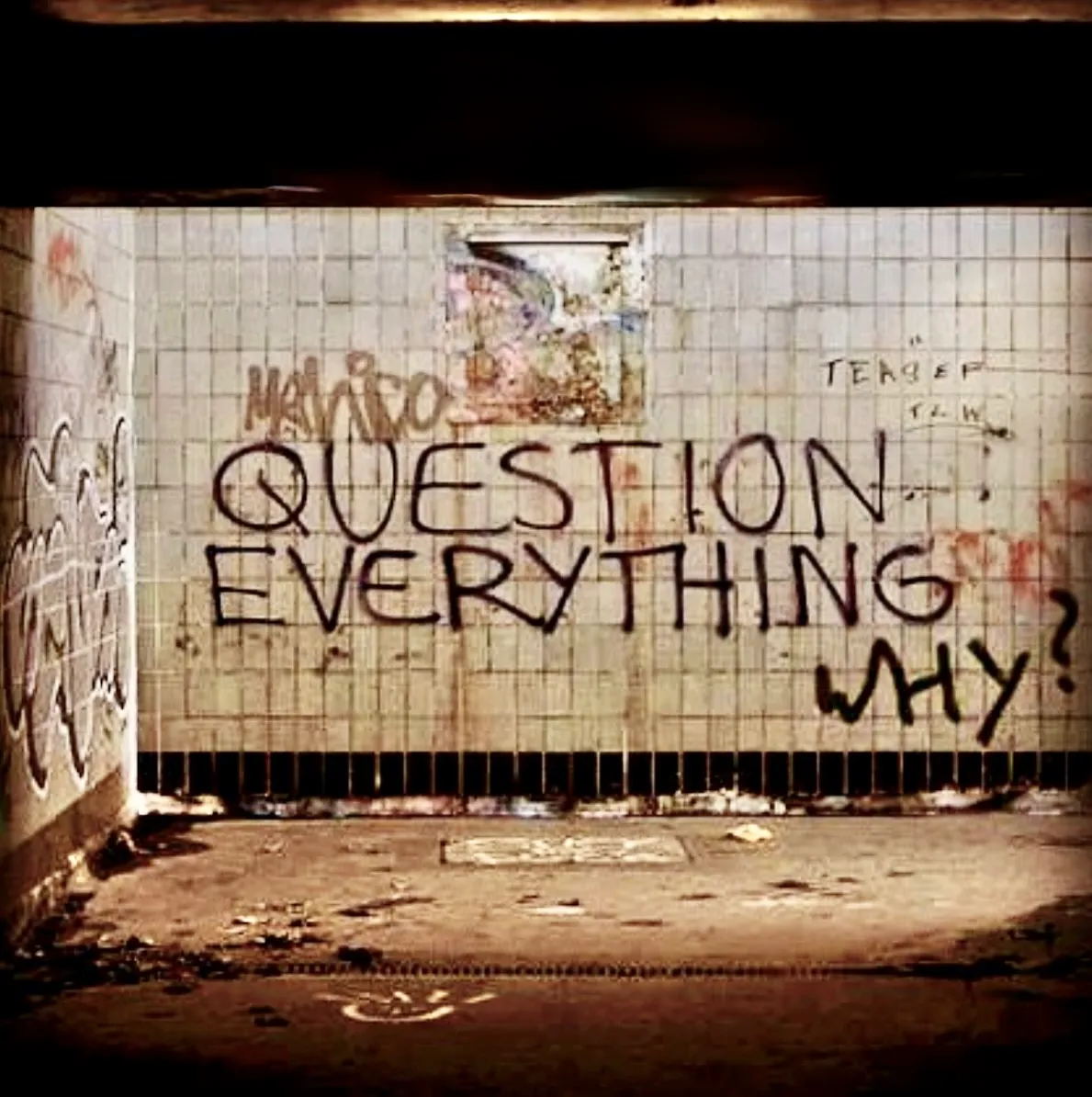
“Question everything,” it says on the wall. This is not just graffiti; it’s a call to reclaim that childlike wonder. It’s an invitation to return to the innocence of a three-year-old who has the courage to ask “why?” about everything — fearlessly, endlessly, and joyfully. And then the second word appears like a challenge: “Why?”

This is the essence of life: Why? Why am I here? Why do I believe what I believe? Why am I living this way?

The Death of Wonder

Most people are asleep. They live like robots — repeating what they have been told, never wondering why. Religion, politics, and culture all offer answers ready-made. They tell you what to believe, what to do, what is right and wrong. And if you dare to ask “why?”, you are labelled difficult, rebellious, or naive.

But to truly live is to question everything. Don’t accept anything at face value — not even what I say! Truth is not something given to you; it’s something you must discover for yourself. Your why is your journey. The moment you stop asking why, your life becomes stagnant. You become a prisoner of borrowed answers.

The Courage to Question

To question is to take a risk. Why? Because the answers might not be what you want to hear. They might tear apart everything you thought was true — your relationships, your beliefs, your identity. It’s not easy. It takes courage to stand alone, to let go of certainty, and to face the unknown.

But the word “why” is powerful. It burns through illusions. You might discover that what you thought was love is really dependency, or that success, as society defines it, is just a fancy word for slavery. When you ask “why?”, you stop living on autopilot. You stop living the life others planned for you. You start carving your own path.

But don’t stop with one answer. Every answer carries another question within it. This is the beauty of life: there are no final conclusions. Life is not a problem to solve; it’s a mystery to experience.

Questioning and Silence

Question everything until the questions themselves disappear. The wisest people — Buddha, Lao Tzu, Jesus — did not find answers; they found silence. When you question deeply enough, the mind falls quiet. The questions dissolve. And in that silence, you realise the truth: there is no final answer — there is only life, here and now.

True questioning is not just intellectual; it’s existential. It brings you to your very core. All the beliefs you borrowed from others fall away, and you are left with nothing but yourself — raw, real, and alive.

Live Your Why

To question is to wake up. To wake up is to truly live. Don’t be afraid to sound foolish or to stand alone. Remember, every great discovery began with a question: Why? What if? Why not?

Let your life be a question, not a conclusion. When you leave this world, don’t leave it with borrowed beliefs. Leave it empty, knowing you questioned, you explored, and you truly lived.

So, the next time your child asks you “why?”, pause for a moment. Don’t rush to silence them. Instead, ask yourself: Why have I stopped asking?

As the graffiti reminds you — “Why?” — let it be more than a question. Let it be your meditation.
Categories
Uncategorized

You are the piece of shadow where my reflection gets lost 40#

4 min read

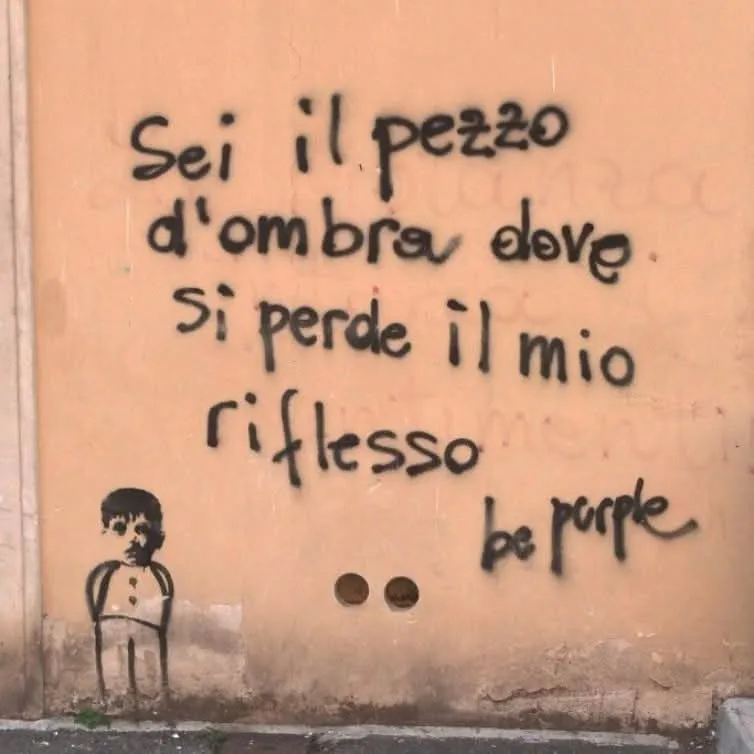
I am a graffiti lover, and I believe that sometimes you can randomly stumble upon truly great pieces of art. It’s fascinating how someone can choose a simple wall to express their voice, share an invitation to think differently, or pour out their deepest thoughts and lessons for the world to see. This particular graffiti, with its poetic words, “You are the piece of shadow where my reflection gets lost,” is no exception. But if you look closely, there’s another layer — a small child drawn beneath the words, staring out at us with haunting simplicity.

The child adds a dimension that turns this piece from a simple poetic statement into something deeper, perhaps even more vulnerable. What does this child represent? Innocence? Vulnerability? Or perhaps the part of ourselves that still lingers in the shadows, waiting to be acknowledged?

The Child as the Shadow

In the poetic phrase, “You are the piece of shadow where my reflection gets lost,” the child below the words could represent the forgotten or hidden parts of ourselves — the childlike essence we often push aside as we grow older. Thich Nhat Hanh often spoke about the “inner child,” the vulnerable, tender self within us that never fully disappears. This child doesn’t judge, doesn’t hold grudges, and doesn’t obsess over reflections or shadows. The child simply is.

When someone else becomes the “shadow where your reflection gets lost,” they may be leading you back to this inner child — a space where you no longer need to hold onto the ego, to define yourself through external mirrors. Instead, you return to simplicity, to being.

The Dance of Light, Shadow, and Innocence

Thich Nhat Hanh often spoke of interbeing, the idea that nothing exists independently — it all depends on everything else. The child beneath the graffiti reminds us of this interconnectedness. A shadow can’t exist without light, and a reflection can’t exist without a surface to reflect upon. The light is clarity, understanding, and individuality — the bright outline of who we think we are. The shadow? That’s the unknown: our fears, desires, insecurities, and everything we’d rather keep hidden.

And the child? The child stands as a reminder that what we often push into the shadows — the tender, vulnerable parts of ourselves — are what make us whole. To lose your reflection in someone else’s shadow is to let go of the rigid definitions of who you are and to surrender to the shared mystery of existence. In that space, we rediscover the openness and innocence of a child.

The Shadow as a Mindful Teacher

Thich Nhat Hanh teaches that even difficult experiences — the shadows in our lives — are opportunities to grow. “No mud, no lotus,” he would say. Shadows, like the mud that nourishes the lotus flower, are essential for transformation. They hold the lessons we often avoid but desperately need.

The child in this graffiti seems to understand this truth better than we do. Look at the simplicity of its gaze — not judging, not resisting. The shadow in this artwork isn’t darkness in the negative sense. It’s the place where we step away from the spotlight of our self-importance, where we can release the constant need to define who we are. It’s a place where, like the child, we can simply be.

“Be Purple”: A Return to Childlike Presence

And then there’s the enigmatic signature at the bottom: “Be Purple.” Why purple? Thich Nhat Hanh often spoke about the beauty of balance — of finding harmony between opposites. Purple is the result of blending the fiery energy of red with the calm serenity of blue. It represents transformation, just as mindfulness transforms suffering into peace, and fear into understanding.

To “be purple” is also to embrace the simplicity of a childlike mind — a mind that sees no division between light and shadow, reflection and loss. It’s an invitation to live fully in the present moment, to embrace innocence and openness, and to allow transformation to unfold naturally, without resistance.

A Reflection Worth Losing

Most of us spend our lives staring at our own reflection — our accomplishments, our image, our identity. But, as Thich Nhat Hanh taught, “We are here to awaken from the illusion of our separateness.” To lose your reflection in someone else’s shadow is not to disappear but to awaken. It is to recognise that you and the shadow, you and the other person, are not two separate entities but part of the same dance of existence.

And what about the child? The child stands beneath these words, not lost in the shadows but waiting for us to remember who we are. To lose your reflection might be to rediscover the simple gaze of that child within you, the one who knew how to live without the weight of ego or expectations.

The Purple Path Forward

So, the next time you encounter someone who pulls you into their shadow, don’t resist. Don’t cling to your reflection or your ego. Instead, let yourself dissolve, as the child reminds us to. Step into that space of unknowing, where innocence meets transformation. Trust that, in losing your reflection, you’re discovering something infinitely more meaningful: connection, humility, and peace.

And as you walk this path, remember the wisdom of both the graffiti and Thich Nhat Hanh: lose yourself, embrace the shadow, reconnect with your inner child — and be purple.

Perhaps the author of this graffiti meant to convey something entirely different, something only they can truly understand. And that’s precisely why it is art. It invites us to bring our own stories, our own meanings, and, like a shadow, it takes shape depending on the light we shine upon it. That’s the magic — art doesn’t give us answers; it gives us the questions we didn’t know we needed to ask. And for that, we should be grateful.

Categories
Uncategorized

Life is a continuum 39#

2 min read
                                                                                 Image by Will McPhail. All rights reserved to the artist.

Life is a continuum, with each generation inheriting a unique blend of challenges, values, and opportunities from the one before it. The statement, “When I was your age, things were hard for my dad when he was my age,” beautifully captures the cyclic nature of human struggle and the perspectives that shape it. Within this reflection lies a profound truth about our interconnectedness and the potential for conscious transformation.

Every generation becomes a bridge between the past and the future. A father’s struggles often stem from the hardships his own father faced, creating an echo through time. Yet, this is not a burden to carry forward — it is an opportunity to understand, transform, and grow. The question is whether we let these echoes define us or rise above them to create a new possibility.

Our lives are shaped not by what happens to us but by how we respond. Every generation faces unique challenges, whether poverty, societal shifts, or emotional disconnection. However, it is not the external difficulties that define us, but the wisdom and resilience we cultivate through them. One generation may pass down compassion and strength; another may perpetuate fear and bitterness. The choice lies in how we engage with these experiences.

Thich Nhat Hanh teaches that the present moment holds the power to heal. Mindfulness reminds us that while pain and difficulty exist, they do not define the entirety of life. By living fully in the present, we honour the struggles of the past without becoming trapped by them. Mindfulness invites us to see that while suffering may have deep roots in the past, joy and healing are always possible in the now.

To truly honour our ancestors’ struggles is not to carry their pain forward but to transcend it and create better possibilities for those who come after us. Thich Nhat Hanh speaks of the interconnectedness of all beings across time, teaching that we carry our ancestors within us and shape future generations through our actions. This realisation urges us to live mindfully, with awareness of our impact on both the past and the future.

Let us ask ourselves: What legacy are we building? Are we perpetuating cycles of hardship, or are we transforming them into opportunities for growth and joy? Recognising past struggles is essential, but defining ourselves by them limits our potential. Life offers us the possibility of shaping a brighter future through awareness, compassion, and conscious choice.

Ultimately, it is not the challenges we inherit that define us but the wisdom we choose to pass on. What will you leave for those who follow — a legacy of hardship, or the strength to transcend it?

Categories
Uncategorized

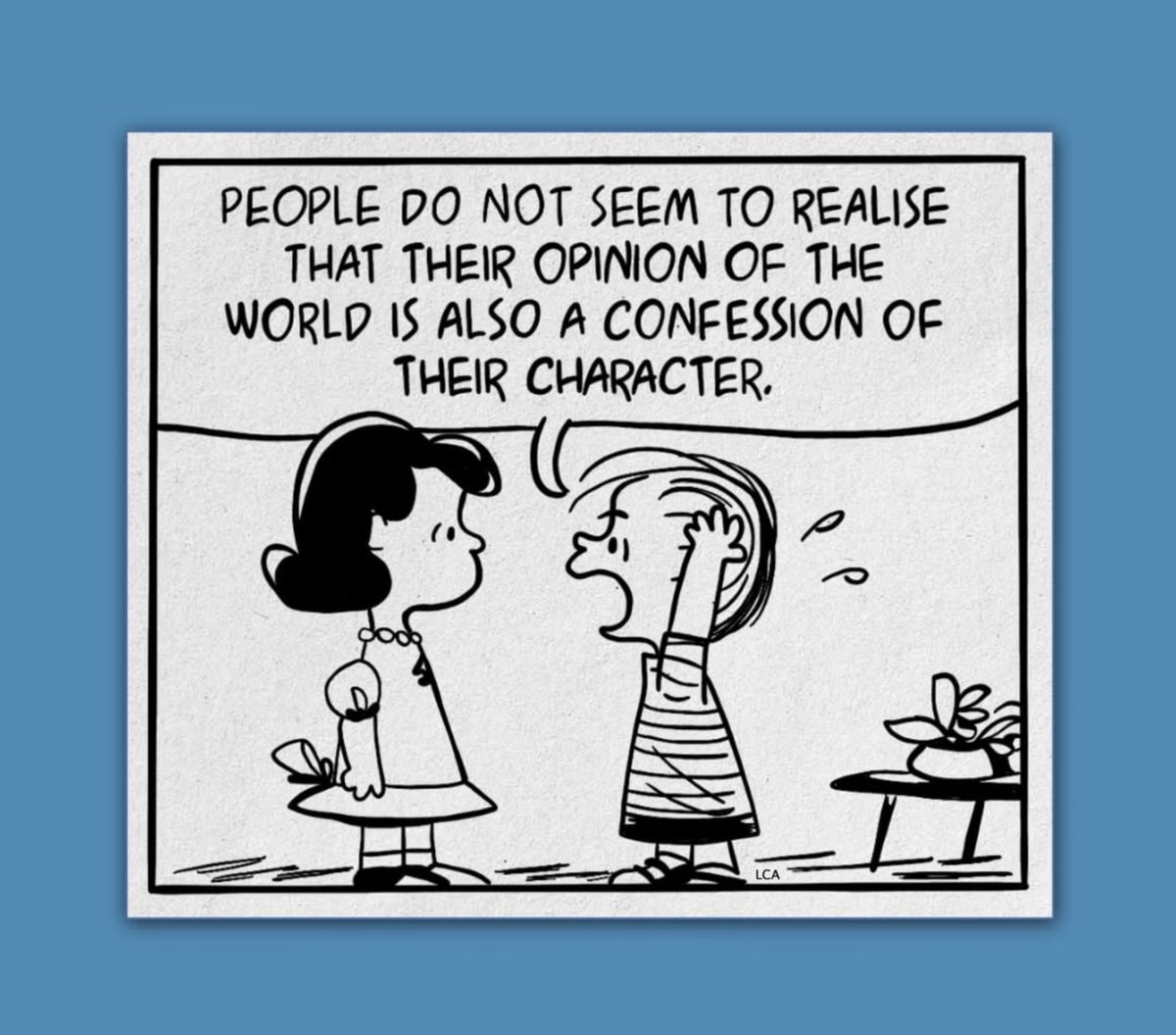
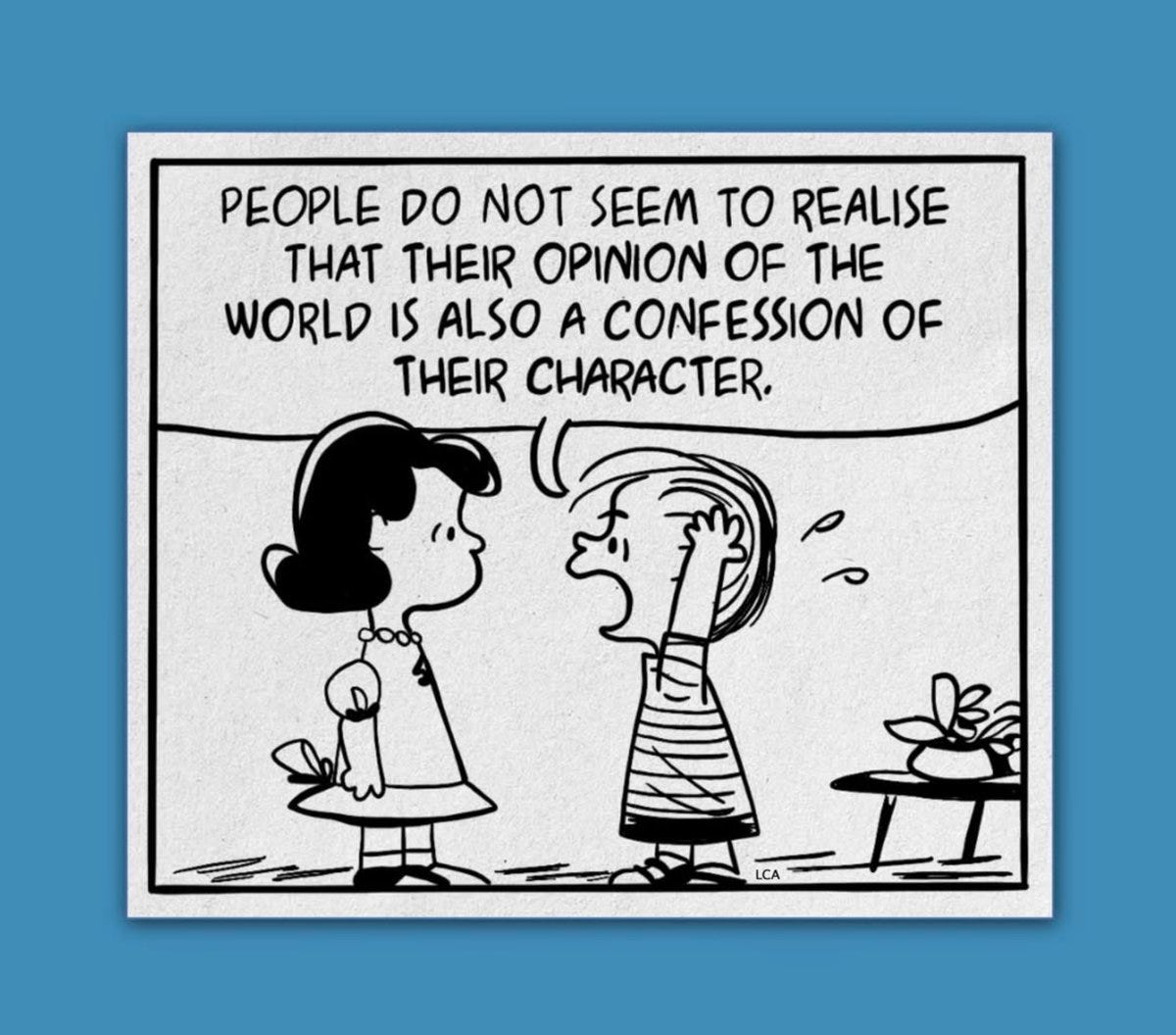
The World is Your Mirror 38#

2 min read

Our opinions about the world are never purely about the world. They are reflections of our inner state — our emotional wounds, unprocessed pain, and unmet needs. As Gabor Maté often highlights, the stories we tell about the world are shaped by the experiences that live within us, whether consciously or unconsciously.

When someone says, “The world is a cruel place,” it may be less a statement of objective truth and more an echo of their own unhealed suffering. As Thich Nhat Hanh reminds us, “When you transform the way you look at things, the things you look at transform.” This is not to deny that suffering exists in the world — of course it does — but to understand that our experience of it is deeply personal. The world becomes a mirror, reflecting the pain or peace we carry inside.

The key to shifting our perspective lies in cultivating awareness and compassion, not just for the world, but for ourselves. This is the essence of mindfulness. When we pause to look deeply at our reactions — our anger, judgment, or despair — we can ask, “Where is this really coming from?” Often, these emotions are rooted in old wounds that have yet to be acknowledged or healed.

Thich Nhat Hanh teaches us to hold these emotions gently, as a parent would cradle a crying child. When we bring this kind of mindful, compassionate attention to ourselves, we begin to heal the suffering within. And as we heal, the way we see the world begins to shift.

Imagine walking through a forest, Thich Nhat Hanh suggests. If your feet are bare and the ground is sharp with stones, every step will feel painful. But if you wear shoes, the very same path becomes easy to walk. The forest hasn’t changed — your relationship to it has. In the same way, when we tend to our inner wounds, we can navigate the world with greater ease and compassion.

So, the next time you find yourself judging the world or others, pause. Breathe. Ask yourself: What is this really about? What is my perception reflecting back to me? Healing and clarity begin with these gentle questions. When you see the world through the lens of a healed and peaceful heart, the world itself becomes a more peaceful and compassionate place.

Categories
Uncategorized

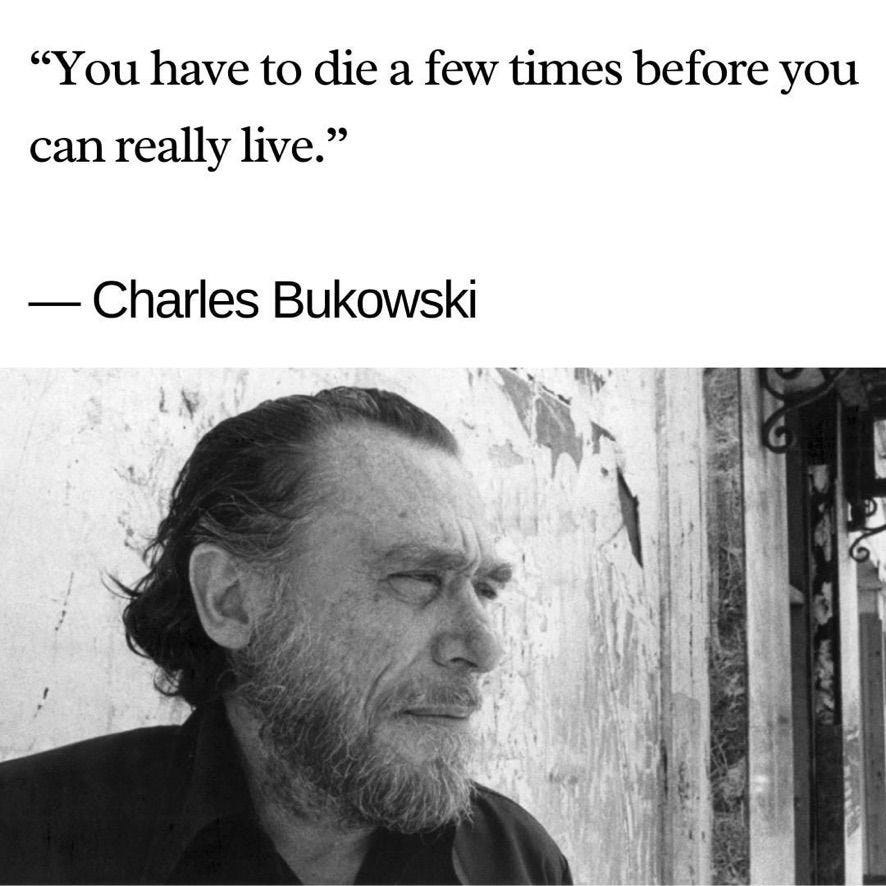
You have to die a few times before you can really live. 37#

What does it mean to die before you truly live? Charles Bukowski, in his raw and unapologetic way, has captured a profound truth that most miss in their hurried lives. To die does not mean the end of your physical body, but the death of the layers of conditioning that have suffocated your being.

We live, but in reality, we are not alive. We follow routines, beliefs, and societal expectations like puppets. This is not life — it is existence, a mechanical repetition of yesterday. Real life begins only when the old self, with its fears and attachments, collapses.

You must die to your ego, to your past, to your false sense of identity. These small deaths are painful — they demand courage. To lose what you think you are is terrifying, but it is only in this emptiness that you find your true self.

A flower must shed its petals to become the fruit. A snake must shed its skin to grow. So must you shed your illusions to experience freedom. Every heartbreak, every failure, every moment of despair — these are the moments of death that life gives you as a gift. They are not your enemies; they are your awakening.

Once you have tasted this inner death, life flows through you with a new freshness. You no longer cling to what is passing. You are free, vibrant, alive in the truest sense. Only then can you truly live — not as a collection of roles and masks, but as the vast, limitless being you are.

So die, again and again, and rise. With each death, a deeper life awaits

Categories
Uncategorized

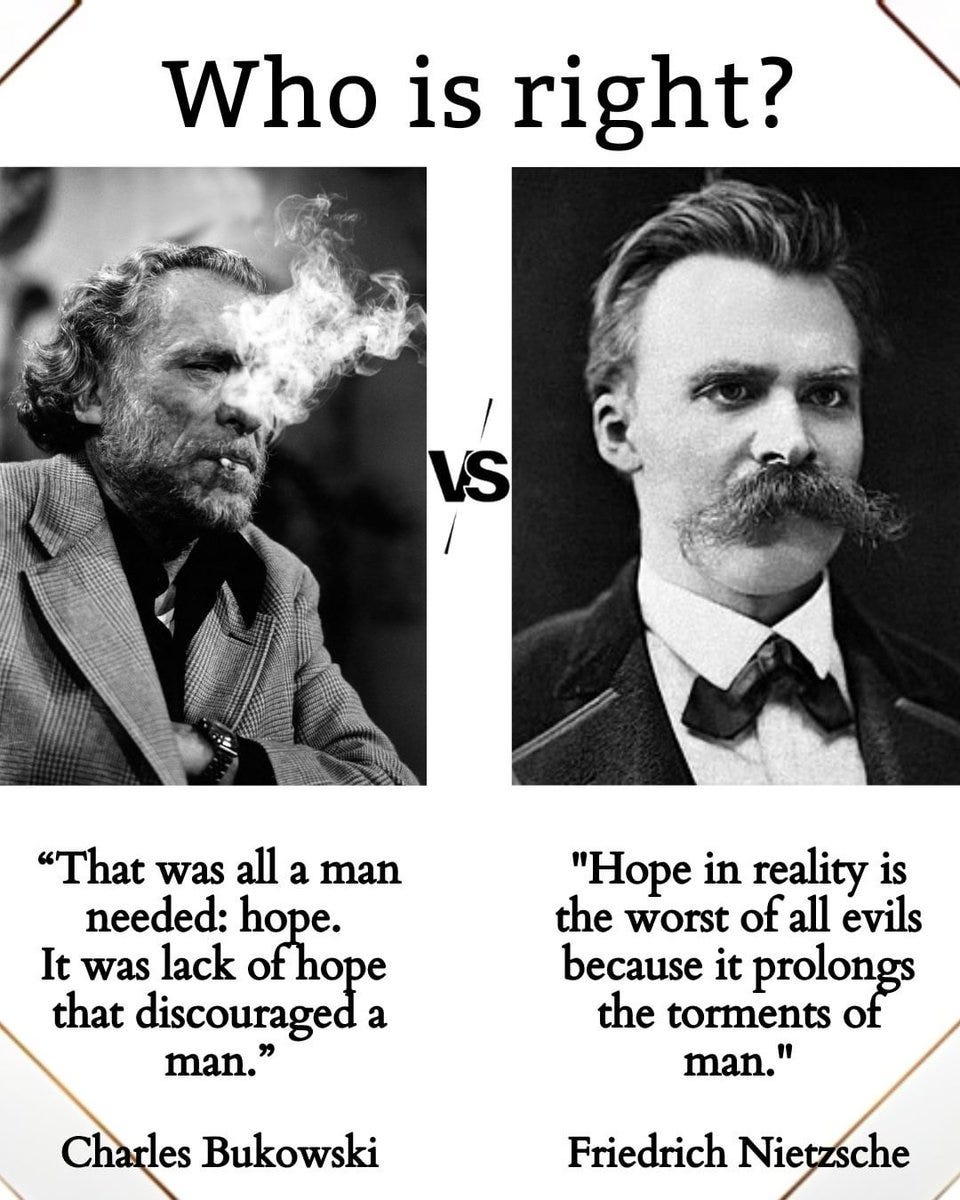
Shall we burn hope, as Nietzsche suggests, or carry it like Bukowski’s lantern in the dark? Viktor Frankl might say, ‘neither.’ 36#

Premise:

Have you ever read something from a philosopher and thought, “Yes, this makes sense, this is true,” only to read another philosopher who says the exact opposite — and you think, “Wait, no, this makes sense too”? It happens to me continuously.

It’s like reading Locke and Hume.

Locke says, “We are born with a blank slate, like an empty notebook. Everything we know comes from experience — what we see, hear, touch, and so on.” Sounds right, doesn’t it? But then Hume comes along and says, “Sure, we learn from experience, but how do you know the sun will rise tomorrow? You’ve only seen it rise before. Your mind just assumes it will happen again, but you don’t actually know for sure.” And you think, “Wait, isn’t he also right?”

It feels confusing, doesn’t it? How can they both be right when they’re saying opposite things? That’s when Hegel steps in and says, “Relax, both of them are part of the truth. Locke focuses on the outside world — what we learn through experience. Hume highlights the uncertainty, memories, and predictions our mind creates based on that experience. Together, they reveal a bigger picture: knowledge emerges not just from external experience but also from the mind’s active role in organising and interpreting it (dialectical synthesis).

With this spirit, I approach Nietzsche and Bukowski, and my Hegel is Viktor Frankl.

Shall we burn hope, as Nietzsche suggests, or carry it like Bukowski’s lantern in the dark? Viktor Frankl might say, ‘neither.’

Nietzsche is clever. He sees that hope can be a trap. You sit there, waiting for tomorrow to save you. But what is tomorrow? It is a dream. And dreams, when clung to, become nightmares. Hope keeps you running, chasing something that may never come. You suffer now because you believe in the promise of relief later.

Perhaps, you are waiting for someone or something to come and save you — a saviour, a miracle, a stroke of luck. But this waiting, this dependence, becomes a prison. It limits your action, your freedom, your ability to move and shape your own life. When you place your hope in someone else, you give away your power. You hand over the reins of your life to a future that may never arrive, to a saviour who may never come. And in that dependence, you lose the courage to act here and now.

Stop waiting then. Stop hoping for someone to open the door. The lock is in your mind, and the key has always been in your hand. The moment you stop depending on the future, on others, on salvation from outside, you discover the immense strength of your own being. You realise you are not a victim waiting to be rescued — you are the source of your own liberation

But then, Bukowski comes along and says, “Without hope, a man is lost.” And he is not wrong. Without hope, you may stop running — but you may also stop moving altogether. You may sink into despair, frozen in the darkness of the present moment.

Personally, when it comes to hope, I believe nobody has observed and experienced it quite like Viktor Frankl. Frankl, a Holocaust survivor, neurologist, and psychiatrist, is best known for his book Man’s Search for Meaning, where he reflects on his time in Nazi concentration camps and explores the importance of finding meaning even in the darkest of circumstances.

In the book, Frankl offers a profound perspective on hope. He recounts the tragic story of a man in a concentration camp who believed he would be liberated by a specific date. That day became his sole focus and his only source of hope. However, when the day arrived and liberation did not come, the man’s hope was shattered. Shortly after, he died — not from physical exhaustion but because his spirit had given up.

For Frankl, this was a powerful lesson: hope tied to a fixed outcome can become a deadly trap. True hope, he suggests, must transcend specific outcomes and remain rooted in a deeper sense of meaning.

The Middle Path

So, what do we do? Shall we burn hope, as Nietzsche suggests? Or shall we carry it like Bukowski’s lantern in the dark? I say, neither. Let us go beyond hope.

Hope is neither your enemy nor your saviour. It is simply a tool. Use it when you must, but do not let it use you. Hope is like a ladder — you climb it to reach higher, but you don’t carry it on your back forever.

The problem is not hope. The problem is your attachment to it. You hope because you fear the present. You hope because you do not trust yourself to face what is here, right now.


A New Understanding

When you are fully present, hope becomes unnecessary. What is the point of dreaming about the future when you are enjoying the reality of now? But let’s not deny the truth — what beauty can you find in a concentration camp? In such unbearable suffering, hope becomes a lifeline, a fragile thread keeping you alive. Yet, even there, hope must not be blind. Use it when it helps, but do not let it enslave you. And most importantly, hope must not come with an expiry date.

Nietzsche feared hope because he saw its chains, tying us to illusions.

Bukowski loved hope because he felt its wings lifting us above despair. It was awful for him to work in a post office, not only because of the drudgery but also because he was unapologetically himself — a misfit in a world demanding conformity. But that’s another story.

Frankl, however, revealed something deeper: hope must be anchored not to a date or outcome but to meaning — a sense of purpose that transcends the circumstances.

For Viktor Frankl, survival was not just a question of “Will I survive?” but rather “Why must I survive?” For some, like the man in the concentration camp, the answer might be the vision of reuniting with loved ones — a meaning so profound it keeps the flame of life alive, even as the world crumbles around them. For Frankl himself, that meaning was found in his purpose: to document the horrors he endured and uncover the lessons within them. He clung to the belief that his suffering could serve a greater purpose, one that would help others navigate their own struggles. This sense of purpose became his anchor, transforming unimaginable pain into a deeper understanding of life and the resilience of the human spirit.

So, in the face of uncertainty and suffering, what is the “why” that fuels your hope and keeps you moving forward? How does your sense of purpose anchor your hope, even when the outcome is unknown?

Categories
Uncategorized

Is Revenge like junk food? Insights from Tacitus 35#

3 min read

Imagine you’re at a restaurant. The waiter approaches with a menu, but it has only two items: Gratitude and Revenge.

Gratitude or Revenge — what a strange restaurant, my friend. But stay with me in this fantasy. One feels heavy, like carrying a sack of stones up a mountain, and the other? Light, fiery, like throwing those stones straight at someone’s head. And here lies the great irony: most people choose to throw the stones.

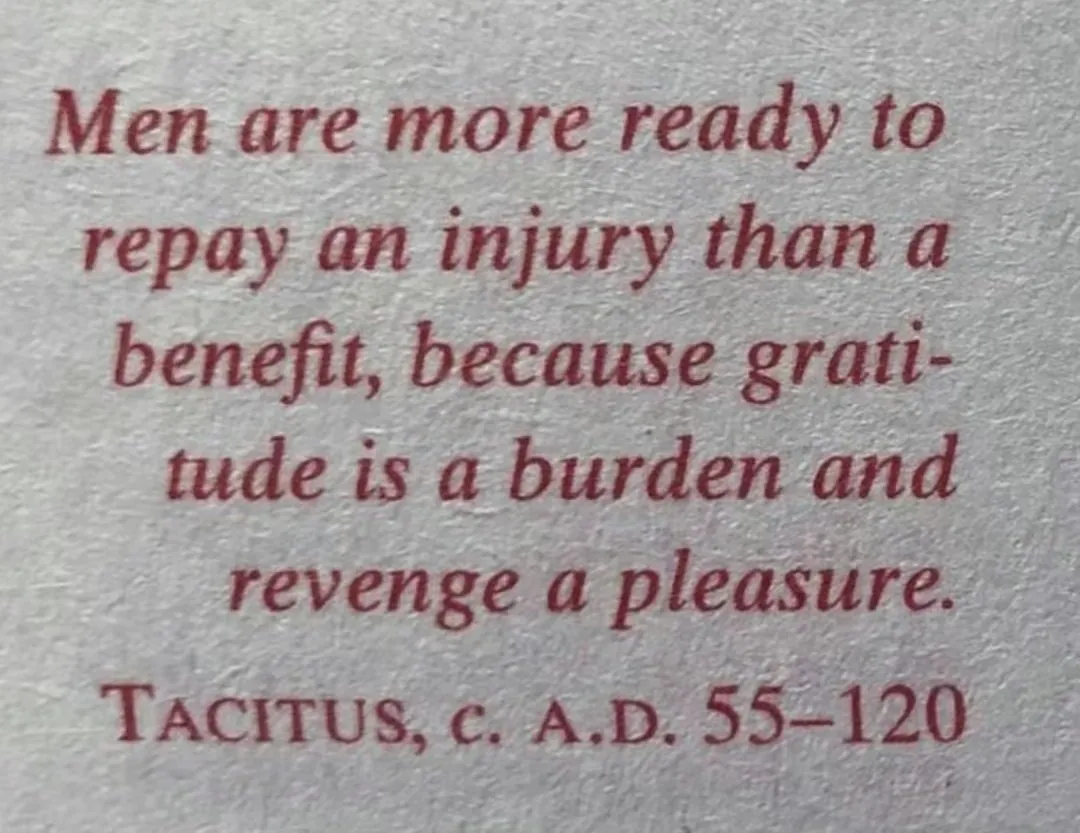
Tacitus knew this well when he said, “Gratitude is a burden, and revenge a pleasure.” And how true it is — for the unconscious mind.

Revenge is delicious, isn’t it? It’s like fast food for the mind— cheap, quick, and instantly satisfying. Someone wronged you, and now you get to play the hero in your own soap opera. You strike back, and for a moment, oh, how powerful you feel! But power built on revenge is like a house of cards — fragile, temporary, and meaningless.

Gratitude, though? Gratitude is slow, quiet, and subtle. It doesn’t hit you over the head with a rush of emotion. It’s not dramatic, and that’s why most people ignore it. Gratitude doesn’t make you feel powerful; it makes you feel connected. And connection is terrifying for the ego. Why? Because to feel gratitude, you must first admit that you are not an island. Someone helped you, someone supported you, and this simple truth bruises the ego’s pride.

And yet, gratitude is the real power. It is the gentle rain that nourishes life. Revenge burns, gratitude grows. One depletes you, the other fills you. But most people still choose revenge. Why? Because it’s easy. You don’t need to reflect, to process, to understand. Someone hurt you? Wonderful — turn into a raging volcano and burn everything in sight. But remember this: once the volcano erupts, it destroys the land around it. And when the lava cools, all that’s left is ash.

Gratitude, on the other hand, is like planting a seed. It takes time. It’s boring at first. But slowly, that seed grows into a tree, offering shade, fruit, and beauty. Gratitude transforms not just you, but everything around you. It’s not flashy, but it’s enduring.

So why do we resist gratitude? Because the ego loves drama. Revenge is dramatic; gratitude is subtle. Revenge inflates the ego; gratitude dissolves it. But here is the truth: gratitude is freedom. When you can feel grateful, you step out of the ego’s prison and into life’s abundance.

If you must indulge in revenge, let it be against your ignorance, your laziness, your small-mindedness.

That is a revenge worth taking. But against another human being? Drop it. It is not worth the energy. Instead, sit quietly. Breathe. Look around. There is so much to be grateful for.

Gratitude is not a burden; it is a celebration. Revenge is not a pleasure; it is poison dressed as dessert. The choice is yours. Do you want to burn, or do you want to bloom?

Categories
Uncategorized

Bring Bukowski’s Irreverence and Thich Nhat Hanh’s Mindfulness to Work #34

3 min read

Bukowski is like a drunk philosopher who accidentally stumbles upon truth while looking for another drink. His philosophy is different from that of any other philosopher — it comes directly from his raw, messy, lived experience rather than from detached observation of reality. While other philosophers sit on mountains or in quiet rooms, observing and reflecting on the world, Bukowski dived headfirst into it. He didn’t just watch the chaos; he lived it, wrestled with it, and occasionally laughed at it with a bottle in hand.

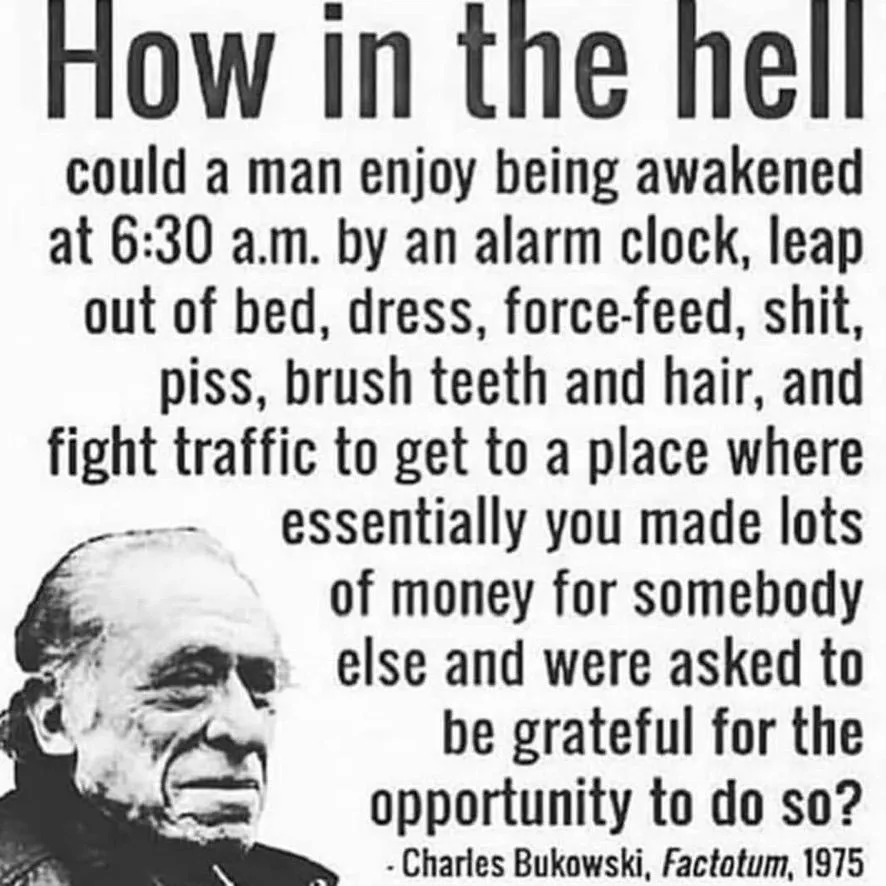
In Factotum (1975), there’s a particular passage that stopped me in my tracks. Bukowski writes:

“How in the hell could a man enjoy being awakened at 6:30 a.m. by an alarm clock, leap out of bed, dress, force-feed, shit, piss, brush teeth and hair, and fight traffic to get to a place where essentially you made lots of money for somebody else and were asked to be grateful for the opportunity to do so?”

What a masterpiece of existential despair! And yet, it’s also a wake-up call — quite literally. Bukowski isn’t just complaining here; he’s exposing the absurdity of a life lived on autopilot, dictated by systems and routines that offer no nourishment for the soul.

The Dance of Absurdity

You see, Bukowski may have cursed the alarm clock, but I say the alarm clock is doing its best to save you. Every beep is a reminder, not just to wake up from sleep, but to wake up from the slumber of your own unconsciousness. Why leap out of bed in terror, as though your boss were a god waiting to strike you down for being late? Why force-feed yourself cereal as if breakfast were an act of survival rather than a moment of joy?

The problem is not the routine itself — it’s that we’ve forgotten the art of playfulness. Life, my dear friend, is a cosmic joke, but you’re taking it far too seriously. Instead of rushing to the office to make money for somebody else, why not laugh at the absurdity of it all?

24 Hours in Front of You

Thich Nhat Hanh often spoke about the gift of 24 brand-new hours in front of you each day. Imagine that — 24 hours, a blank canvas, filled with potential. What you choose to do with those hours can transform the ordinary into the extraordinary. The act of waking up doesn’t need to be a frantic rush toward deadlines; it can be a gentle reminder to appreciate life’s simple wonders. That first sip of coffee, the feel of the morning air, the sunlight streaming through your window — these are moments that invite mindfulness, not mindlessness.

Reclaim Your 6:30 A.M.

So tomorrow, when the alarm clock rings, do something revolutionary. Don’t leap out of bed like a soldier summoned to duty. Instead, lie there for a moment and smile. Say to yourself, “Here we go again — another chance to enjoy these 24 hours in front of me.” And if you must go to work, bring Bukowski’s irreverence and Thich Nhat Hanh’s mindfulness with you. Turn every mundane task into an act of appreciation. Live not as a slave to the system but as a mindful participant in the dance of life.

Because the real freedom is not in quitting your job or smashing your alarm clock; it’s in realising that even at 6:30 a.m., you have a choice. The choice to live, to breathe, and to see the absurdity for what it is — a cosmic invitation to wake up, not just from sleep, but from the dream of a life unlived.

Categories
Uncategorized

AI and the intimacy of being understood 33#

3 min read

Yuval Noah Harari, historian and author of the bestselling book Sapiens: A Brief History of Humankind, poses a provocative question: What are some arguments for and against a future in which humans no longer have relationships with other humans and only have relationships with AI? At first glance, it feels like an abstract, distant scenario — something plucked from the pages of science fiction. But when you think about it, are we really so far from this reality?

Technology already shapes how we connect, mediating our relationships through screens, algorithms, and virtual spaces. Harari’s question isn’t about a hypothetical future — it’s about recognising the trajectory we’re already on. And his perspective forces us to consider: what would it mean for human intimacy if AI became our primary source of understanding and connection?

In one of his talks, Harari points to a deep human truth: we all long to be understood. We want the people in our lives — partners, parents, friends — to truly see and hear us. But people, by their very nature, are fallible. They bring their own emotions, distractions, and biases into every interaction. Harari argues that AI, unburdened by feelings, might succeed where we so often fail. It could devote itself entirely to understanding us.

And yet, even as the audience laughs at his example, a quiet discomfort lingers. Could a machine ever replace the nuanced, imperfect beauty of human connection? Would we even want it to?

We often mistake connection for communication and proximity for intimacy. But true intimacy isn’t about how often we speak or how physically close we are. It’s about being deeply understood. It’s in those rare moments when someone listens — not just to our words, but to what lies beneath them. When they see us as we are, without judgement or expectation, we feel a connection that transcends explanation. This kind of intimacy is rare, and perhaps that’s what makes it so powerful.

And this is where Harari’s vision of AI meets the reality of human connection. AI could, in theory, analyse us with precision, understanding our feelings and mirroring them back to us. But intimacy is not just about being understood; it’s about the bravery of vulnerability. It’s about two imperfect people meeting each other in the messy, unpredictable space of human connection. True intimacy is not calculated; it’s courageous.

In a world increasingly shaped by algorithms, it’s worth remembering that intimacy often surprises us in the least expected places. A friend who listens without the need to fix us. A stranger who meets our vulnerability with kindness. Even a moment of quiet in nature, where we feel deeply connected to something larger than ourselves. These moments remind us that intimacy isn’t just about human relationships — it’s a thread that ties us to the whole of existence.

Ultimately, Harari’s question isn’t just about the rise of AI — it’s about what it reveals about us. Our need for connection. Our fear of vulnerability. And our willingness to trade the richness of human intimacy for the convenience of technological understanding. Intimacy, true intimacy, is not something we receive; it’s something we co-create. It’s the quiet magic of seeing and being seen, listening and being heard. It’s the one thing AI, for all its brilliance, can never truly replicate. And that, perhaps, is what makes it sacred.

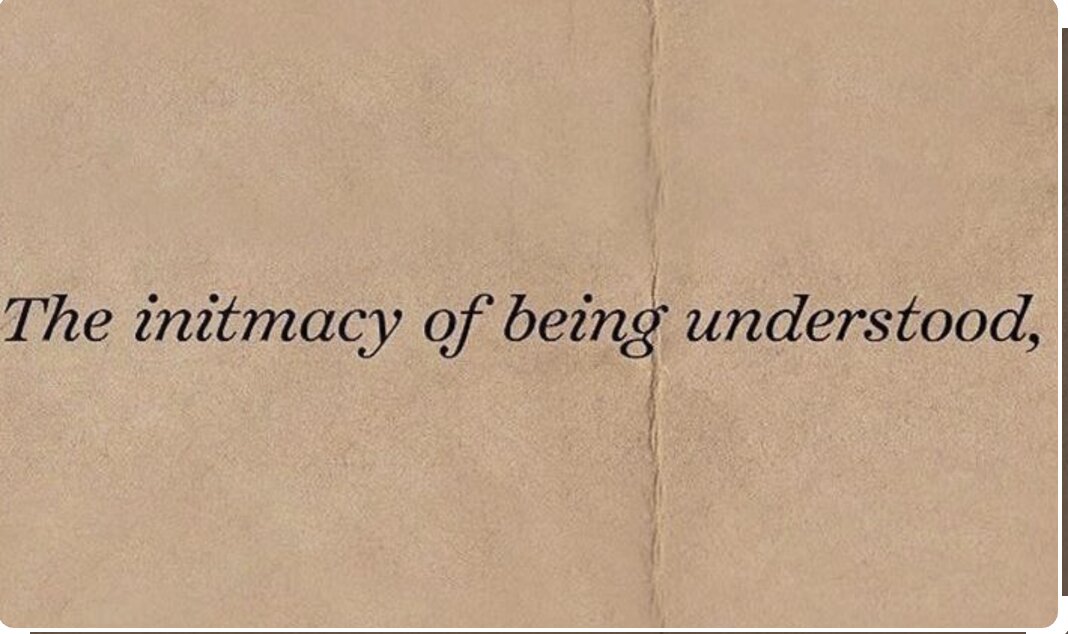
P.S. Have you noticed the spelling mistake in the picture of this article? After all, being “understood” means embracing our mistakes too, doesn’t it?

Categories
Uncategorized

Papa’, who’s that guy? Learn to become a Glimmer-Seeker. 32

4 min read

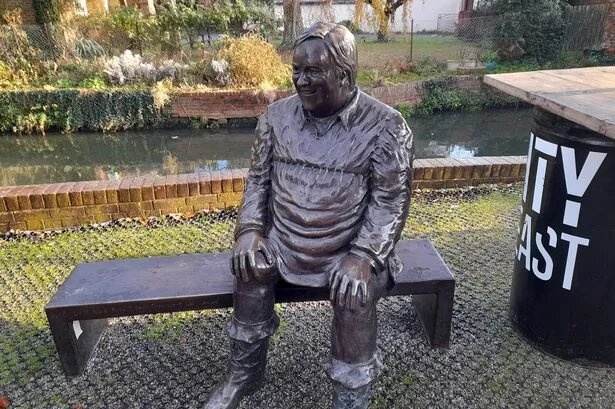
                                                            Dave Lee MBE was a renowned entertainer and comedian (Image: KentLive)

The other day, I decided to take my kids to the park here in Canterbury, England — a place where cobbled streets whisper history and every corner seems to have a story. The plan was simple: head to the park, have some fun, maybe meet some friends. But my kids, as usual, had their own agenda.

As we strolled through the charming streets, they weren’t in a hurry. Not even close. First, they stopped in front of a statue. “Papa, who’s that guy?” one of them asked, pointing to a figure I’d passed dozens of times without really noticing. Turns out, it was Dave Lee, a renowned entertainer and comedian. Of course, I’d seen the statue before but had never taken the time to learn who he was. My kids, however, insisted we pause to learn. So we did.

Then it was, “Papa, look at this flower!” They bent down to admire a tiny bloom pushing its way through a crack in the pavement. I had walked right past it, too busy thinking about the park. But there it was, blooming against all odds. Almost like an act of rebellion, that flower seemed to say, “Hey, even here, there’s beauty. Even here, I can blossom.” It reminded me of something deeper — the story of Sisyphus, condemned to push a rock uphill for eternity. The flower, like Sisyphus, seemed to embrace its struggle with defiant grace, thriving in a place where it wasn’t supposed to.

And then there was the giant mask, ‘Bulkhead,’ which I had always thought of as just another sculpture. But my kids saw it differently. To them, it was a playground, an invitation to climb, laugh, and imagine. They weren’t just walking to the park; they were finding joy in every step of the journey. Meanwhile, I was standing there, wondering why it was taking so long to get anywhere.

The Beauty of Small Acts

Life, much like that flower, often thrives in unexpected places. A crack in the pavement isn’t a promising home, yet the flower blooms anyway. It’s a quiet reminder that beauty and resilience aren’t bound by circumstances. Sometimes, they flourish precisely because of them.

In Canterbury, with its ancient walls and historic charm, you’d think inspiration would come from grand cathedrals or sweeping landscapes. But no, it’s the flower in the crack, the giggle of a child, the way sunlight catches the cobblestones. These moments are glimmers — tiny sparks of wonder that often go unnoticed.

Glimmers: The Quiet Rebels of Life

If life is a series of challenges, glimmers are its secret resistance fighters. They show up uninvited, gently reminding us that joy is always possible. A glimmer might be a kind smile from a stranger, the smell of freshly baked bread from a Canterbury café, or the way your kids turn a sculpture into a jungle gym.

Glimmers are like the flower growing through the crack — defiant, unyielding, quietly whispering, “Hey, notice me. I’m here.” But they don’t shout. They don’t demand. They wait patiently for you to see them. And if you don’t? Well, the joke’s on you, because glimmers keep happening whether you notice them or not.

What Glimmers Teach Us

That walk with my kids taught me something profound: glimmers aren’t just pretty distractions. They’re acts of rebellion against the chaos of life. They remind us that even when things feel overwhelming, there’s still space for beauty, joy, and curiosity. And here’s the kicker — they’re always there. You don’t need to go looking for them. You just need to slow down enough to see them.

How to Be a Glimmer-Seeker

Becoming a “glimmer-seeker” doesn’t require effort, just attention. Start with the little things. Notice the way your tea steams in the morning or the way a leaf dances in the wind. Let yourself feel the warmth of sunlight or the silliness of a child’s laughter. It’s not about fixing your life or chasing big dreams. It’s about finding joy in the cracks — in the things that seem small but hold so much meaning.

The Takeaway

So, here’s what I learned that day: life isn’t about rushing to the park; it’s about finding the magic on the way there. It’s about noticing the flowers, the statues, the glimmers. Life isn’t the grand adventure we think we’re waiting for. It’s the little things we overlook.

That flower in the pavement? It doesn’t need perfect conditions to bloom. Neither do you. And just like my kids taught me that day, you don’t need to rush to the park to find joy. Joy is already there, waiting for you to notice. So pause. Look around. Find the glimmers. And when life winks at you, don’t forget to wink back.

The Takeaway

So, here’s what I learned that day: life isn’t about rushing to the park; it’s about finding the magic on the way there. It’s about noticing the flowers, the statues, the glimmers. Life isn’t the grand adventure we think we’re waiting for. It’s the little things we overlook.

That flower in the pavement? It doesn’t need perfect conditions to bloom. Neither do you. And just like my kids taught me that day, you don’t need to rush to the park to find joy. Joy is already there, waiting for you to notice. So pause. Look around. Find the glimmers. And when life winks at you, don’t forget to wink back.